
St. Rosalia's Day
2029Sunday, July 15
Quick Facts
- Date
- Sunday, July 15, 2029
- Observed in
- Italy
- Type
- Religious Holiday
What is St. Rosalia's Day?
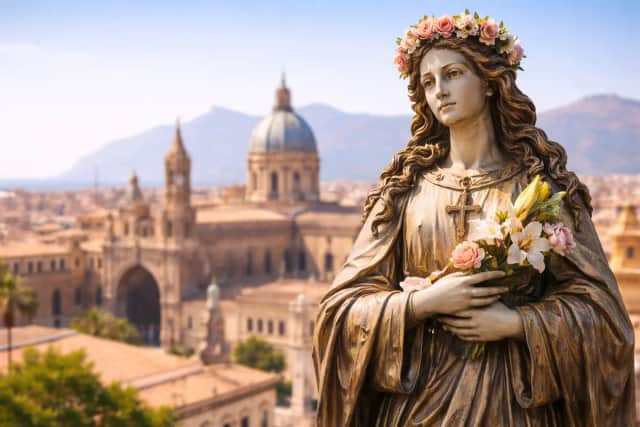
St. Rosalia's Day (Festa di Santa Rosalia) celebrates the patron saint of Palermo, Sicily. The main feast day is July 15th, commemorating the discovery of her relics in 1624, which ended a devastating plague. A secondary feast occurs on September 4th, her traditional death anniversary. St. Rosalia (1130-1166) was a Norman noblewoman who renounced worldly life to become a hermit, living in a cave on Monte Pellegrino above Palermo. The Festino di Santa Rosalia, held July 10-15, is one of Italy's most spectacular religious festivals, featuring a massive triumphal chariot, processions, and fireworks.
When is St. Rosalia's Day 2029?
St. Rosalia's Day is on Sunday, July 15 in 2029. Check the dates and days for other years in the table below.
History & Origin
St. Rosalia was born around 1130 to a noble Norman family in Sicily, possibly descended from Charlemagne. As a young woman at the court of King Roger II, she rejected marriage proposals and chose a life of religious devotion. She initially lived as a hermit at Quisquina near Bivona, then moved to a cave on Monte Pellegrino overlooking Palermo, where she spent her final years in prayer and penance until her death around 1166. Her story might have remained obscure until 1624, when a terrible plague struck Palermo, killing thousands. According to tradition, Rosalia appeared in visions to a sick woman and a hunter named Vincenzo Bonello, revealing the location of her remains. When her bones were found in the Monte Pellegrino cave and carried in procession through Palermo, the plague miraculously ended. She was canonized in 1630.
How It's Celebrated
The Festino di Santa Rosalia is a five-day celebration from July 10-15, culminating on her feast day. The highlight is the spectacular procession featuring a massive triumphal chariot (carro trionfale), an ornate float several stories tall carrying a statue of Santa Rosalia. The chariot is pulled through Palermo's streets from the Palazzo dei Normanni to the sea, accompanied by brass bands, performers, and thousands of devotees. On the night of July 14th, the city explodes with fireworks over the harbor. Pilgrims climb Monte Pellegrino to visit her sanctuary cave, many walking barefoot as an act of devotion. Traditional foods include babbaluci (boiled snails), sfincione (Sicilian pizza), and watermelon. The September 4th celebration includes a procession carrying her relics through the city.
Where It's Observed
Fun Facts
- The triumphal chariot in the Festino can be up to 15 meters tall and weighs several tons
- When Rosalia's relics were discovered in 1624, scientists confirmed they were those of a young woman who lived in medieval times
- The phrase U Festinu (The Festino) is synonymous with celebration and joy in Sicilian dialect
- During the 1624 plague, Palermo lost about a third of its population before Rosalia's intervention
- The cave sanctuary on Monte Pellegrino contains a statue of the saint lying as if asleep, created from her actual bones
Frequently Asked Questions
When is St. Rosalia's Day celebrated?
The main feast day is July 15th, commemorating the discovery of her relics in 1624. A secondary feast is held on September 4th, marking the traditional anniversary of her death.
Why is St. Rosalia the patron saint of Palermo?
She became Palermo's patron saint after her relics were discovered in 1624 during a devastating plague. When her bones were processed through the city, the plague miraculously ended, saving thousands of lives.
What is the Festino di Santa Rosalia?
The Festino is a five-day festival from July 10-15 featuring processions, a massive decorated chariot carrying the saint's statue, music, traditional foods, and spectacular fireworks. It is one of Italy's largest religious festivals.
Where did St. Rosalia live?
After leaving the Norman court, she lived as a hermit first at Quisquina near Bivona, then in a cave on Monte Pellegrino above Palermo, where she spent her final years in prayer until her death around 1166.
Travel Inspiration
Planning a trip around St. Rosalia's Day? Explore our travel guides for destinations where this holiday is celebrated.


