
St. Andrew's Day (Amalfi)
2024Saturday, November 30
Quick Facts
- Date
- Saturday, November 30, 2024
- Observed in
- Italy
- Type
- Religious Holiday
What is St. Andrew's Day (Amalfi)?
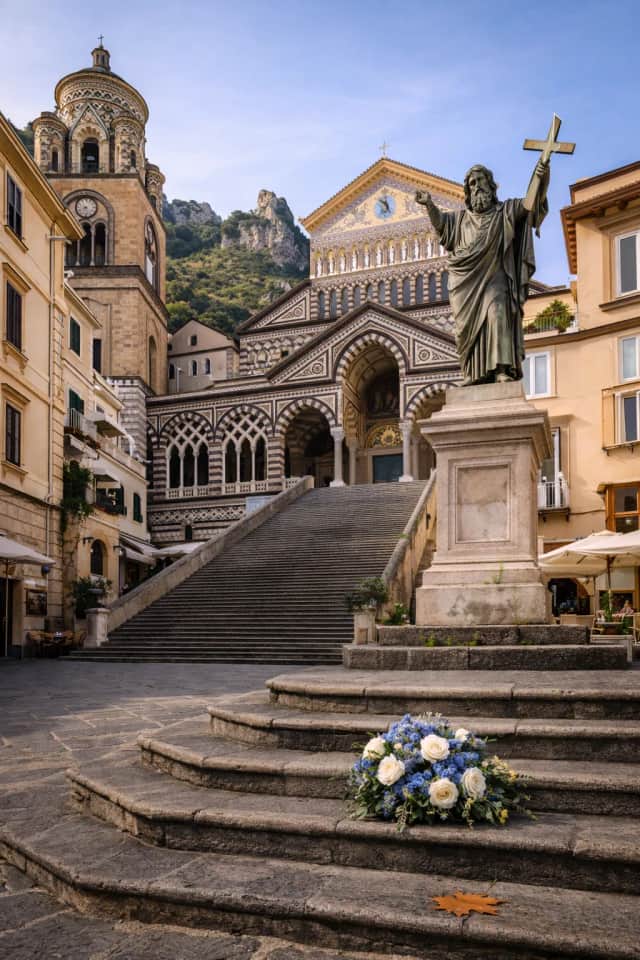
St. Andrew's Day (Festa di Sant'Andrea) is celebrated on November 30 in Amalfi, honoring the town's beloved patron saint. St. Andrew, one of the Twelve Apostles and brother of St. Peter, holds special significance for this historic maritime republic on Italy's Amalfi Coast. The celebration centers on the magnificent Amalfi Cathedral (Duomo di Sant'Andrea), which houses the apostle's relics in its crypt. The day features a spectacular procession where the silver statue of St. Andrew is carried up and down the cathedral's iconic 62-step staircase, accompanied by prayers, music, and the participation of the entire community.
When is St. Andrew's Day (Amalfi) 2024?
St. Andrew's Day (Amalfi) is on Saturday, November 30 in 2024. Check the dates and days for other years in the table below.
History & Origin
St. Andrew was a fisherman from Bethsaida who became one of Jesus Christ's first disciples. According to tradition, he was martyred on an X-shaped cross in Patras, Greece, around 60 AD. His relics were later moved to Constantinople. In 1208, Cardinal Pietro Capuano brought St. Andrew's relics from Constantinople to Amalfi during the Fourth Crusade, establishing the city as a major pilgrimage destination. The Amalfi Cathedral, originally built in the 9th century and expanded over subsequent centuries, was dedicated to the apostle. The crypt beneath the cathedral, completed in 1206, became the final resting place for the sacred relics. Since then, Amalfi has maintained an unbroken devotion to St. Andrew, celebrating his feast day with elaborate ceremonies that have evolved over eight centuries.
How It's Celebrated
The main celebration takes place at the Amalfi Cathedral, beginning with a solemn Mass attended by religious and civil authorities. The highlight is the dramatic procession of the silver statue of St. Andrew, crafted in the 16th century. Strong men called portatori carry the heavy statue down the 62 steps of the cathedral's grand staircase to the piazza below, then back up again - a physically demanding feat performed with great devotion. Fireworks light up the night sky over the Mediterranean Sea. The faithful gather in the crypt to venerate the relics and collect the miraculous manna - a clear liquid that is said to appear on the apostle's tomb. Local restaurants serve traditional dishes, and the town is decorated with lights and religious imagery. A second major celebration occurs on June 27, commemorating the arrival of the relics.
Where It's Observed
Fun Facts
- The manna of St. Andrew is a clear liquid that reportedly appears on the apostle's relics, especially around his feast days
- St. Andrew's Cross appears on the flags of Scotland, where he is also patron saint, and on the naval ensign of Russia
- The silver statue of St. Andrew weighs approximately 60 kilograms and requires multiple portatori to carry it
- Amalfi was one of the four powerful Maritime Republics of medieval Italy, alongside Venice, Genoa, and Pisa
- The 62 steps of the Amalfi Cathedral staircase were completed in 1203, just five years before the arrival of St. Andrew's relics
Frequently Asked Questions
When is St. Andrew's Day celebrated in Amalfi?
St. Andrew's Day is celebrated on November 30 in Amalfi. A second celebration takes place on June 27, commemorating the arrival of the saint's relics in 1208.
What is the manna of St. Andrew?
The manna is a miraculous clear liquid that is said to appear on St. Andrew's relics, particularly around his feast days. The faithful believe it has healing properties, and it is collected and distributed by the cathedral clergy.
Where are St. Andrew's relics kept?
St. Andrew's relics are kept in the crypt of the Amalfi Cathedral (Duomo di Sant'Andrea). The crypt was specifically built to house the relics after they arrived from Constantinople in 1208.
Why is St. Andrew the patron saint of Amalfi?
St. Andrew became Amalfi's patron saint when his relics were brought to the city in 1208 by Cardinal Pietro Capuano. The apostle is credited with protecting the town, including saving it from a pirate attack in 1544.
Travel Inspiration
Planning a trip around St. Andrew's Day (Amalfi)? Explore our travel guides for destinations where this holiday is celebrated.


