
St. Agatha's Day
2026Thursday, February 5
Quick Facts
- Date
- Thursday, February 5, 2026
- Observed in
- Italy
- Type
- Religious Holiday
What is St. Agatha's Day?
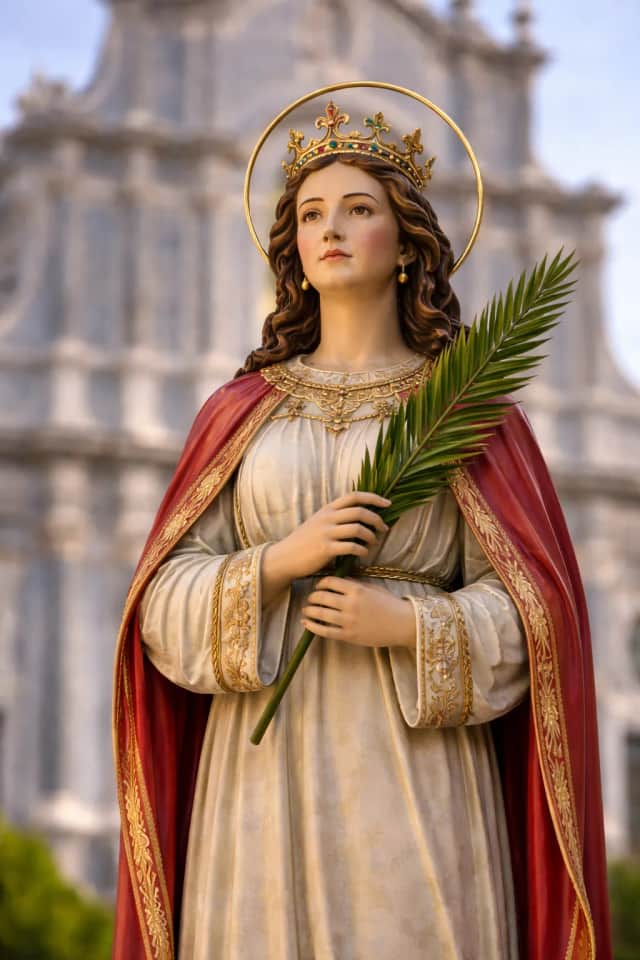
St. Agatha's Day (Festa di Sant'Agata) is a major religious festival celebrated from February 3-5 in Catania, Sicily, honoring St. Agatha, the city's patron saint. This three-day celebration is one of the world's largest religious festivals, drawing over one million pilgrims and devotees annually. The festival features elaborate processions carrying the fercolo, a silver bust reliquary containing St. Agatha's relics, through the streets of Catania. The celebration combines deep religious devotion with spectacular Sicilian traditions, including the famous candelore (giant decorated candles) and traditional fireworks displays.
When is St. Agatha's Day 2026?
St. Agatha's Day is on Thursday, February 5 in 2026. Check the dates and days for other years in the table below.
History & Origin
St. Agatha was born in Catania around 231 AD to a noble family. During the persecution of Christians under Roman Emperor Decius, the governor Quintianus sought to possess her. When Agatha refused his advances and remained faithful to her Christian vows, Quintianus subjected her to terrible tortures, including the cutting off of her breasts. According to legend, St. Peter appeared to her in prison and healed her wounds. She died from further tortures on February 5, 251 AD. Shortly after her death, Mount Etna erupted, and the people of Catania prayed to St. Agatha. When they held her veil before the lava flow, it miraculously stopped. This established her as protector of Catania against Etna's eruptions. She was canonized and became one of the most venerated virgin martyrs in Christianity.
How It's Celebrated
The Festa di Sant'Agata unfolds over three days of intense celebration. On February 3, the candelore procession features eleven massive decorated candles representing the city's guilds, carried through the streets accompanied by bands. February 4 marks the main procession when the fercolo, the silver bust reliquary containing St. Agatha's relics, is brought out of the cathedral. Thousands of devotees dressed in white sackcloth (sacco) pull the fercolo through the city streets on ropes, a journey that continues through the night until dawn on February 5. The faithful shout "Cittadini, cittadini, semu tutti devoti tutti?" (Citizens, are we all devotees?) with the response "Viva Sant'Agata!" The festival includes spectacular fireworks and traditional Sicilian foods, particularly the minne di Sant'Agata (breast-shaped pastries) and olivette di Sant'Agata (marzipan olives).
Where It's Observed
Fun Facts
- The Festa di Sant'Agata draws over one million participants, making it one of the three largest Catholic celebrations in the world
- The fercolo weighs approximately 900 kilograms and requires hundreds of devotees to pull it through the streets
- The candelore can weigh up to 900 kilograms each and are carried by teams of men called portatori
- St. Agatha's relics were stolen and taken to Constantinople in 1040, but returned to Catania in 1126
- The traditional minne di Sant'Agata pastries symbolize the martyrdom of the saint
Frequently Asked Questions
When is the Festa di Sant'Agata celebrated?
The Festa di Sant'Agata is celebrated from February 3-5 in Catania, Sicily. February 5 marks the actual feast day of St. Agatha, commemorating her martyrdom in 251 AD.
What is the fercolo?
The fercolo is a silver bust reliquary containing the relics of St. Agatha. It is carried through the streets of Catania during the main procession, pulled by thousands of devotees dressed in white sackcloth.
What are the candelore?
The candelore are eleven giant decorated candles representing different guilds of Catania. They can weigh up to 900 kilograms and are carried through the streets by teams of men on February 3.
Why is St. Agatha important to Catania?
St. Agatha is the patron saint of Catania. According to legend, her veil stopped a lava flow from Mount Etna, making her the city's protector against volcanic eruptions.
Travel Inspiration
Planning a trip around St. Agatha's Day? Explore our travel guides for destinations where this holiday is celebrated.


