
Slovak National Uprising Day
2030Thursday, August 29
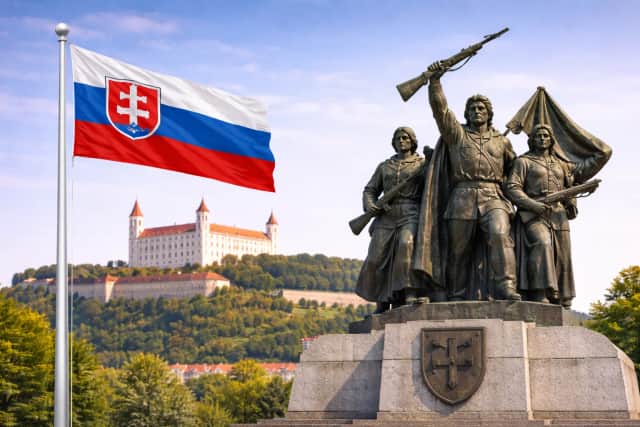
Quick Facts
- Date
- Thursday, August 29, 2030
- Observed in
- Slovakia
- Type
- National Holiday
What is Slovak National Uprising Day?
Slovak National Uprising Day (Slovenské národné povstanie, SNP) is a public holiday in Slovakia celebrated on August 29th, commemorating the armed resistance against Nazi German occupation that began on this day in 1944. It stands as one of the most significant events in modern Slovak history and represents the Slovak people's struggle for freedom and national dignity.
The uprising was a remarkable act of resistance during World War II, involving both military forces and civilian partisans who fought against the fascist Slovak puppet state and its Nazi German allies. Although ultimately suppressed by German forces after two months, the uprising demonstrated the Slovak people's rejection of fascism and their desire for liberation.
Today, the Slovak National Uprising represents a cornerstone of Slovak national identity. The day is marked by official ceremonies, wreath-laying at monuments, historical exhibitions, and commemorative events throughout the country, particularly in Banská Bystrica, which served as the uprising's headquarters.
When is Slovak National Uprising Day 2030?
Slovak National Uprising Day is on Thursday, August 29 in 2030. Check the dates and days for other years in the table below.
History & Origin
Background: Slovakia During World War II
After the Munich Agreement of 1938 and the subsequent dismemberment of Czechoslovakia, Slovakia became a nominally independent state under the authoritarian leadership of Jozef Tiso and the Slovak People's Party. This Slovak Republic (1939-1945) was a client state of Nazi Germany, participating in the invasion of Poland and later the Soviet Union.
However, significant opposition to the fascist regime existed within Slovakia, including democratic politicians, communists, and military officers who maintained contacts with the Czechoslovak government-in-exile in London and with Soviet forces.
The Outbreak of the Uprising (August 29, 1944)
By summer 1944, with the Soviet Red Army approaching from the east, Slovak resistance groups prepared for an armed uprising. The catalyst came when German forces entered Slovakia to suppress partisan activity.
On August 29, 1944, the Slovak National Council proclaimed the uprising from Banská Bystrica. Key military units, including the Eastern Slovak Army, joined the resistance. The uprising controlled significant territory in central Slovakia, including major cities like Banská Bystrica, Zvolen, and Brezno.
The Course of the Uprising
The insurgents established a functioning state administration in the liberated territory:
- The Slovak National Council served as the political leadership
- A regular army of approximately 60,000 soldiers was formed
- Partisan units conducted guerrilla operations
- Democratic institutions were restored
The insurgents hoped for rapid Soviet assistance and coordination with Allied forces. However, help was limited, and German forces launched a major counter-offensive in late October 1944.
Suppression and Aftermath
By late October, German forces, including SS units, recaptured the insurgent-held territory. The regular uprising forces transitioned to partisan warfare in the mountains, continuing resistance until liberation by Soviet forces in spring 1945.
The German occupation was brutal—thousands of Slovaks were killed, villages were burned, and reprisals were widespread. Despite the military defeat, the uprising achieved significant political goals, establishing Slovakia's position among the anti-fascist Allies.
How It's Celebrated
Official Commemorations: The main state ceremony takes place at the SNP Memorial in Banská Bystrica. The President of Slovakia, government officials, and foreign dignitaries attend. Wreath-laying ceremonies are held at the memorial and eternal flame. Military honors and musical performances are presented, along with the reading of names of fallen heroes.
Throughout Slovakia: Local ceremonies are held at war memorials and cemeteries. Church services are conducted in memory of those who died. Schools organize educational programs about the uprising. Museums offer special exhibitions and guided tours.
Cultural Events: Historical reenactments take place at significant locations. Concerts featuring patriotic music are performed. Film screenings of documentaries and historical films are shown, along with book presentations and historical lectures.
Veteran Recognition: The day honors surviving veterans of the uprising, partisans, and their families. Their testimonies are preserved and shared with younger generations.
Traditional Elements: Lighting of memorial candles, playing of the Slovak national anthem and resistance songs, moments of silence at 12:00 noon, and displaying of Slovak flags on public buildings and homes.
Where It's Observed
Slovak National Uprising Day is a public holiday in 1 country. In 2030, it falls on Thursday, August 29.
Fun Facts
- The Slovak National Uprising involved approximately 60,000 regular soldiers and 18,000 partisans at its peak
- The uprising controlled about one-third of Slovak territory for approximately two months
- Banská Bystrica's radio station broadcast the uprising's proclamation, announcing that Slovakia was joining the Allied fight against Nazi Germany
- The insurgent air force conducted over 1,500 sorties during the uprising, using aircraft obtained from defecting Slovak Air Force units
- The SNP Memorial in Banská Bystrica, designed by architect Dušan Kuzma, was completed in 1969 and is considered a masterpiece of socialist modernist architecture
- Among the uprising's participants were soldiers of various nationalities, including Czechs, Soviets, French, Americans, and British prisoners of war who escaped from German camps
- The uprising's political leadership included both communist and democratic representatives, symbolizing unity against fascism
- After the uprising was suppressed, approximately 30,000 Slovaks were sent to concentration camps
Frequently Asked Questions
When is Slovak National Uprising Day celebrated?
Slovak National Uprising Day is celebrated on August 29th, marking the date in 1944 when the armed resistance against Nazi German occupation officially began.
What was the Slovak National Uprising?
The Slovak National Uprising (SNP) was an armed resistance movement that began on August 29, 1944, against the Nazi German occupation and the collaborationist Slovak government. It involved both military forces and civilian partisans who fought for Slovakia's liberation and alignment with the Allied powers.
Where did the uprising take place?
The uprising was centered in central Slovakia, with Banská Bystrica serving as its headquarters. The insurgents controlled significant territory including cities like Zvolen, Brezno, and Liptovský Mikuláš.
How long did the uprising last?
The organized uprising lasted approximately two months, from August 29 to late October 1944. After German forces recaptured the main territory, resistance continued as partisan warfare in the mountains until liberation in spring 1945.
Why is the uprising important to Slovak national identity?
The uprising demonstrated that Slovaks actively resisted fascism and fought for freedom alongside the Allies. It helped establish Slovakia's position as a co-founder of post-war Czechoslovakia and remains a symbol of courage and the struggle for democracy.
Is August 29th a public holiday in Slovakia?
Yes, August 29th is a public holiday in Slovakia. Banks, schools, and most businesses are closed, and official commemorations are held throughout the country.
Travel Inspiration
Planning a trip around Slovak National Uprising Day? Explore our travel guides for destinations where this holiday is celebrated.


