
Pentecost
2030Sunday, June 9
Quick Facts
- Date
- Sunday, June 9, 2030
- Observed in
- Austria, Belgium, Switzerland, Cyprus, Germany +15 more
- Type
- Religious Holiday
What is Pentecost?
Pentecost, also known as Whitsunday or Whit Sunday, is one of the most significant Christian holidays, commemorating the descent of the Holy Spirit upon the Apostles and other followers of Jesus Christ. The event, described in the Acts of the Apostles, occurred 50 days after Easter Sunday, which is why the name derives from the Greek word "pentēkostē" meaning "fiftieth." For Christians worldwide, Pentecost marks a pivotal moment in religious history - the birthday of the Christian Church.
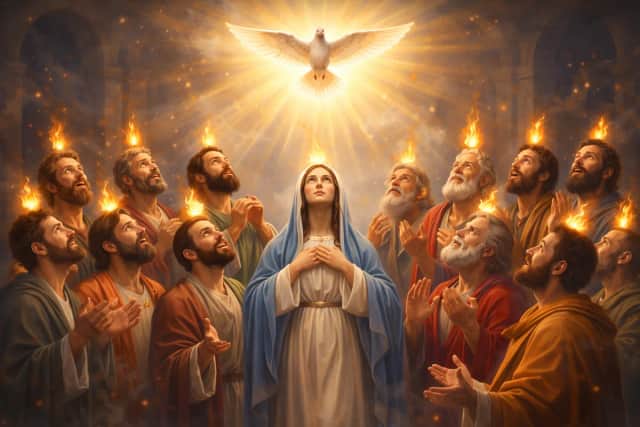
The holiday holds profound theological significance as it represents the fulfillment of Jesus Christ's promise to send the Holy Spirit as a divine guide and comforter to his followers. When the Spirit descended "like tongues of fire," the apostles were suddenly able to speak in different languages, allowing them to communicate the Gospel to people from many nations who had gathered in Jerusalem. This miraculous event transformed a small group of frightened disciples hiding in an upper room into bold preachers who would spread Christianity across the Roman Empire.
Today, Pentecost is celebrated by over 2 billion Christians across all denominations - Catholic, Protestant, Orthodox, and Pentecostal churches each have their own unique ways of observing this holy day. In many European countries, both Pentecost Sunday and Whit Monday are public holidays, creating a long weekend that has become one of the most popular travel periods of the year.
When is Pentecost 2030?
Pentecost is on Sunday, June 9 in 2030. Check the dates and days for other years in the table below.
History & Origin
The origins of Pentecost are deeply intertwined with Jewish tradition. The Christian Pentecost coincides with the Jewish festival of Shavuot (the Feast of Weeks), which celebrates the giving of the Torah to Moses at Mount Sinai, occurring 50 days after Passover. When the first Christian Pentecost occurred, Jerusalem was filled with Jewish pilgrims from across the Mediterranean world who had come to celebrate Shavuot - this is why Acts describes people from Parthia, Media, Mesopotamia, Judea, Cappadocia, Pontus, Asia, Phrygia, Pamphylia, Egypt, Libya, Rome, Crete, and Arabia all being present.
According to the New Testament book of Acts (chapter 2), the apostles and other followers of Jesus - about 120 people in total - were gathered in an upper room in Jerusalem when suddenly "a sound like the blowing of a violent wind came from heaven and filled the whole house." Then "they saw what seemed to be tongues of fire that separated and came to rest on each of them." All present were filled with the Holy Spirit and began speaking in other languages.
The Apostle Peter then delivered his famous Pentecost sermon, quoting the prophet Joel and explaining that this event fulfilled biblical prophecy. His sermon was so powerful that about 3,000 people were baptized that day, forming the first Christian community. This is why Pentecost is often called the "Birthday of the Church."
The celebration of Pentecost as a Christian feast dates back to at least the 1st century CE, making it one of the oldest Christian observances. By the 3rd century, it had become one of the three principal feasts of Christianity alongside Easter and Epiphany. The name "Whitsunday" emerged in medieval England, likely referring to the white garments worn by those baptized on this day.
How It's Celebrated
Pentecost traditions vary beautifully across different cultures, countries, and Christian denominations, creating a rich tapestry of celebrations around the world.
Church Celebrations: The liturgical color for Pentecost is red, symbolizing both the flames of the Holy Spirit and the blood of Christian martyrs. Churches are decorated with red banners, vestments, and flowers. Special services include readings from Acts 2, singing traditional hymns like "Veni Creator Spiritus" (Come, Creator Spirit), and in many traditions, the confirmation of young Christians who have completed their religious education.
European Traditions: In Germany and Austria, Pentecost (Pfingsten) is celebrated with outdoor festivals, processions, and the tradition of "Pfingstochse" - decorating an ox with flowers and parading it through town. In France, trumpets are blown during church services to represent the "mighty wind" of the Spirit. In Italy, rose petals are scattered from church ceilings to symbolize the fiery tongues. In Poland, homes are decorated with green branches and flowers, symbolizing the renewal of life through the Spirit.
British Traditions: In the UK, Whitsunday was traditionally associated with "Whitsun Walks" or processions, especially in northern England where churches would parade through towns with brass bands. Morris dancing, cheese rolling, and well-dressing ceremonies were also common. Many villages held "Whitsun Ales" - community celebrations with food and drink.
Modern Celebrations: Today, Pentecost weekend has also become a major travel period in Europe. The combination of pleasant late-spring weather and public holidays in many countries makes it ideal for short vacations. Many families use the long weekend for outdoor activities, camping trips, or visits to relatives.
Religious Significance
For Christians, Pentecost represents one of the most theologically significant events in the New Testament, carrying deep meaning that continues to shape faith and practice today.
The Gift of the Holy Spirit: Pentecost marks the fulfillment of Jesus's promise in John 14:16-17 to send "another Advocate" who would be with believers forever. The Holy Spirit is understood as the third person of the Trinity - God present with and within believers to guide, comfort, convict, and empower them for service.
The Birth of the Church: Before Pentecost, the followers of Jesus were a scattered, frightened group hiding from authorities. After receiving the Holy Spirit, they became bold witnesses who fearlessly proclaimed the Gospel. The 3,000 baptisms that day formed the nucleus of what would become a global faith community of over 2 billion people.
Reversal of Babel: Many theologians see Pentecost as a reversal of the Tower of Babel story in Genesis 11, where God confused human languages. At Pentecost, the Spirit enabled communication across language barriers, symbolizing that the Gospel message is for all peoples and nations.
Denominational Emphases: Different Christian traditions emphasize various aspects of Pentecost. Catholics celebrate it as a major solemnity and often schedule confirmations on this day. Orthodox churches celebrate Pentecost as one of the Great Feasts, with special prayers and the decoration of churches with greenery. Pentecostal and Charismatic churches particularly emphasize the ongoing work of the Spirit through spiritual gifts like speaking in tongues, prophecy, and healing.
Theological Significance: The "tongues of fire" imagery connects Pentecost to other biblical theophanies involving fire - the burning bush, the pillar of fire, and Mount Sinai. Fire symbolizes God's presence, purification, and power. The wind imagery connects to the Hebrew word "ruach" and Greek "pneuma," both meaning both "wind/breath" and "spirit."
Where It's Observed
Pentecost is a public holiday in 11 countries. In 2030, it falls on Sunday, June 9.
Travel Tips
Pentecost weekend (including Whit Monday) is one of the busiest travel periods in Europe, rivaling Easter and Christmas in popularity. Here's what travelers should know:
Peak Travel Period: In countries where Whit Monday is a public holiday (Germany, Austria, Switzerland, France, Belgium, Netherlands, Luxembourg, Norway, Denmark, Hungary), expect significant crowds at popular destinations. Airports, train stations, and highways experience heavy traffic, especially on the Friday before and Tuesday after the holiday weekend.
Booking Advice: Reserve accommodations 4-8 weeks in advance for popular destinations. Prices for hotels, vacation rentals, and flights typically increase 20-40% during this period. Consider staying in smaller towns or villages adjacent to major tourist destinations for better availability and prices.
Weather Conditions: Pentecost falls in late May or early June, generally offering pleasant weather across Europe - warm but not hot, with longer daylight hours. This makes it ideal for outdoor activities, hiking, cycling, and sightseeing. However, late spring can bring occasional rain showers, so pack layers and a light rain jacket.
What's Open and Closed: Many shops, supermarkets, and services close on both Sunday and Monday in countries where Whit Monday is a public holiday. Plan your shopping accordingly. However, restaurants, cafes, tourist attractions, and public transportation generally operate, often with holiday schedules.
Cultural Experiences: Consider attending a Pentecost church service, even if you're not religious - many feature beautiful music and historic settings. Look for local festivals, processions, and traditional celebrations that offer authentic cultural experiences.
Alternative Destinations: If you want to avoid crowds, consider destinations in countries where Pentecost is not a public holiday (UK, US, Southern Europe) or explore less-touristed regions of countries that do celebrate it.
Fun Facts
- Pentecost is one of the seven moveable feasts in the Christian calendar, always falling between May 10 and June 13 depending on when Easter occurs
- The name 'Whitsunday' likely comes from 'White Sunday,' referring to the white baptismal garments worn by converts baptized on this day in the early Church
- Pentecost is the third most important Christian holiday after Christmas and Easter, and is called the 'Birthday of the Church'
- The red color associated with Pentecost represents both the flames of fire (the Holy Spirit) and the blood of Christian martyrs
- In Wales, Whitsunday was traditionally a day for 'Whitsun Walks' - long processions through towns with brass bands and decorated banners
- The Upper Room in Jerusalem, where the first Pentecost occurred, is called the 'Cenacle' and is one of Christianity's holiest sites
- In Italy, rose petals are dropped from church ceilings during Pentecost services to symbolize the tongues of fire
- The Book of Acts records that about 3,000 people were baptized on the first Pentecost - the largest single-day conversion in Christian history
- In Germany, it's traditional to decorate an ox with flowers ('Pfingstochse') and parade it through town
- Pentecost is celebrated by over 2 billion Christians worldwide across all major denominations
- The longest sermon in the New Testament is Peter's Pentecost sermon, recorded in Acts 2:14-41
- In some countries, Pentecost weekend marks the unofficial start of summer and the beginning of outdoor festival season
Frequently Asked Questions
When is Pentecost 2026?
Pentecost 2026 falls on Sunday, May 24th. Whit Monday (the day after) is Monday, May 25th. This creates a long weekend in countries where Whit Monday is a public holiday.
Is Pentecost a public holiday?
Yes, in many European countries! Pentecost Sunday and/or Whit Monday is a public holiday in Germany, Austria, Switzerland, France, Belgium, Netherlands, Luxembourg, Norway, Denmark, and Hungary. In some countries like Poland, Italy, Spain, Portugal, UK, and US, it is observed religiously but is not a public holiday.
Why is Pentecost called Whitsunday?
The name 'Whitsunday' (White Sunday) most likely comes from the white garments traditionally worn by those who were baptized on this day in the early Church. Pentecost was one of the traditional days for baptism, and the newly baptized wore white robes as a symbol of their spiritual purification.
How is the date of Pentecost calculated?
Pentecost always falls exactly 50 days (7 weeks) after Easter Sunday. Since Easter is a moveable feast based on the lunar calendar, Pentecost can occur anytime between May 10 and June 13. In 2026, Easter is April 5th, making Pentecost May 24th.
What is the difference between Pentecost and Shavuot?
Shavuot is the Jewish festival occurring 50 days after Passover, celebrating the giving of the Torah at Mount Sinai. The Christian Pentecost occurred during Shavuot, when the Holy Spirit descended on the apostles. Both holidays occur at the same time of year and share the '50 days' element, but they commemorate different events.
Why is red the color of Pentecost?
Red is the liturgical color for Pentecost because it symbolizes two things: the 'tongues of fire' that descended on the apostles when the Holy Spirit came, and the blood of Christian martyrs who gave their lives for the faith. Churches are decorated with red banners, flowers, and vestments on this day.
What happened at the first Pentecost?
According to Acts 2, about 120 followers of Jesus were gathered in Jerusalem when suddenly a sound like a violent wind filled the house, and what appeared to be tongues of fire rested on each person. They were filled with the Holy Spirit and began speaking in different languages. Peter then preached a sermon that led to about 3,000 people being baptized.
Is Pentecost the same as Pentecostal Christianity?
While related, they're not the same. Pentecost is the Christian holiday celebrated by all Christian denominations. Pentecostal Christianity is a movement that began in the early 1900s emphasizing the gifts of the Holy Spirit (like speaking in tongues) described in Acts 2. Pentecostals take their name from the Pentecost event.
Travel Inspiration
Planning a trip around Pentecost? Explore our travel guides for destinations where this holiday is celebrated.


