
New Year's Eve
2026Thursday, December 31
Quick Facts
- Date
- Thursday, December 31, 2026
- Observed in
- United Arab Emirates, Argentina, Austria, Australia, Bosnia & Herzegovina +54 more
- Type
- Cultural Holiday
What is New Year's Eve?
New Year's Eve is celebrated on December 31st, the last day of the year in the Gregorian calendar. It is one of the most widely celebrated holidays worldwide, marking the transition from one year to the next with festivities, fireworks, and hope for the future.
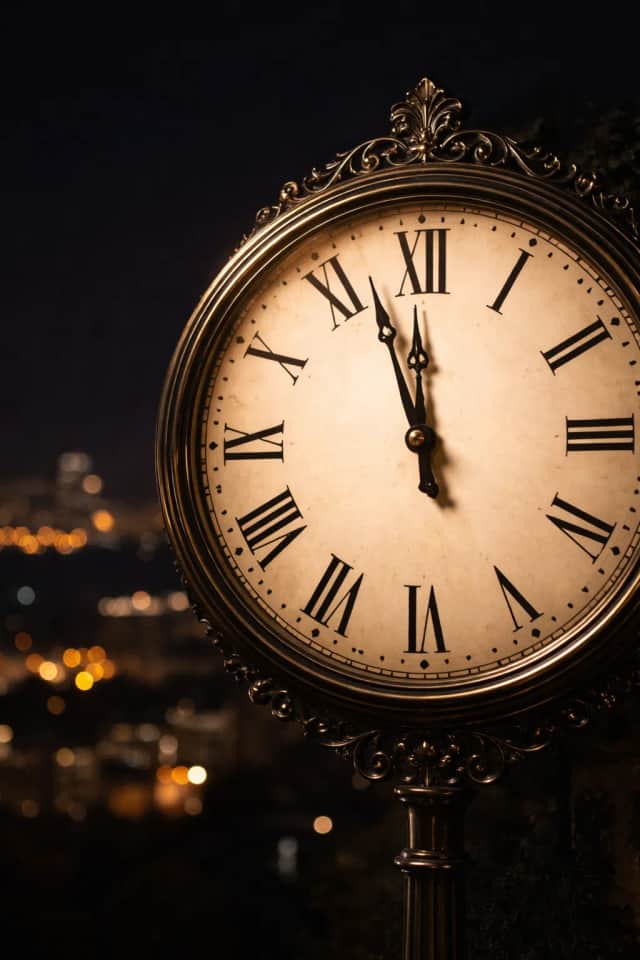
The celebration typically begins in the evening and continues past midnight into New Year's Day. People gather with family and friends to count down the final seconds of the year, often accompanied by spectacular fireworks displays.
New Year's Eve is a time for reflection on the past year and setting intentions for the year ahead. The holiday transcends cultural and religious boundaries, bringing people together in celebration of new beginnings.
When is New Year's Eve 2026?
New Year's Eve is on Thursday, December 31 in 2026. Check the dates and days for other years in the table below.
History & Origin
The celebration of the new year is one of the oldest holidays, dating back at least 4,000 years to ancient Babylon. However, the date of celebration has varied throughout history.
The Romans originally celebrated the new year on March 1st, but in 153 BCE moved it to January 1st when newly elected consuls began their terms. Julius Caesar's calendar reform in 46 BCE established January 1st as the official start of the year.
The tradition of midnight celebrations became popular in the 19th century, coinciding with the development of accurate timekeeping. The famous Times Square ball drop in New York City began in 1907 and has become one of the world's most iconic New Year's Eve traditions.
"Auld Lang Syne," the song traditionally sung at midnight, was written by Scottish poet Robert Burns in 1788 and has become synonymous with New Year's Eve celebrations worldwide.
How It's Celebrated
Countdown and Ball Drops: The iconic Times Square ball drop in New York attracts millions of viewers. Similar events occur in cities worldwide.
Fireworks: Spectacular fireworks displays light up the sky at midnight in cities from Sydney to London to Rio de Janeiro.
Champagne Toast: Raising a glass of champagne or sparkling wine at midnight is a universal tradition symbolizing celebration and good fortune.
Auld Lang Syne: Singing this traditional Scottish song while holding hands at midnight is a beloved custom in English-speaking countries.
New Year's Resolutions: Making promises for self-improvement in the coming year is a popular tradition dating back to ancient Babylon.
First-Footing: In Scotland and northern England, the first person to enter a home after midnight brings luck for the year.
Eating Lucky Foods: Many cultures eat specific foods for luck, such as grapes in Spain, lentils in Italy, and black-eyed peas in the American South.
Kissing at Midnight: Sharing a kiss with a loved one at midnight is believed to ensure affection throughout the year.
Where It's Observed
Fun Facts
- The Times Square ball drop has occurred every year since 1907, except for 1942-1943 during wartime blackouts
- Sydney's fireworks display uses over 100,000 pyrotechnic effects and is seen by over 1 billion viewers worldwide
- In Spain, people eat 12 grapes at midnight, one for each stroke of the clock, for good luck
- The song Auld Lang Syne means old long since or days gone by in Scots
- In Denmark, people throw unused plates against friends' doors for good luck
- Japanese Buddhist temples ring bells 108 times at midnight to cleanse 108 worldly desires
- In Colombia, people carry empty suitcases around the block hoping for a travel-filled year
- The earliest New Year celebrations on record date back to ancient Babylon around 2000 BCE
Frequently Asked Questions
Why do we celebrate New Year's Eve on December 31st?
The date comes from the Roman calendar reforms. Julius Caesar established January 1st as the start of the year in 46 BCE, making December 31st the last day. This was later adopted by the Gregorian calendar in 1582, which most of the world uses today.
Where did the tradition of New Year's resolutions come from?
The practice dates back to ancient Babylon about 4,000 years ago. Babylonians made promises to their gods at the start of each year. The tradition was adopted by the Romans, who made promises to the god Janus (for whom January is named), and continues today in secular form.
Why do we toast with champagne at midnight?
Champagne has been associated with celebrations since French royalty began drinking it in the 17th century. Its effervescence symbolizes celebration and joy. The tradition of toasting at midnight became widespread in the 19th and 20th centuries as champagne became more accessible.
What is the origin of Auld Lang Syne?
The song was written by Scottish poet Robert Burns in 1788, based on an older folk song. It became associated with New Year's Eve when bandleader Guy Lombardo popularized playing it at midnight on radio and TV broadcasts starting in 1929.
Why is New Year's Eve celebrated at midnight?
Midnight marks the exact transition from one year to the next. The focus on midnight celebrations grew in the 19th century as accurate timekeeping became widespread. The dramatic countdown creates a shared moment of anticipation and celebration.
What are some lucky foods to eat on New Year's Eve?
Many cultures have lucky foods: grapes in Spain (12 for each month), lentils in Italy (representing coins and prosperity), black-eyed peas in the American South, soba noodles in Japan (for longevity), and pork in many European countries (pigs root forward, symbolizing progress).
Travel Inspiration
Planning a trip around New Year's Eve? Explore our travel guides for destinations where this holiday is celebrated.


€55 vs. €178: Schönbrunn Palace tour comparison, Vienna
Read more →
Where to Stay in Livno: Best Places for Your Visit
Read more →
Where to Stay in Vienna: Best Neighborhoods & Accommodations
Read more →
Where to Stay in Buenos Aires for the First Time
Read more →