
Mardi Gras
2025Tuesday, March 4
Quick Facts
- Date
- Tuesday, March 4, 2025
- Observed in
- United States
- Type
- Regional Holiday
What is Mardi Gras?
Mardi Gras, French for \"Fat Tuesday\", is a state holiday in Louisiana celebrated on the day before Ash Wednesday — exactly 47 days before Easter. As the culminating day of the Carnival season, it marks the last day of feasting and celebration before the Christian season of Lent begins.
Mardi Gras is deeply tied to the Christian liturgical calendar. The Carnival season begins on Epiphany (January 6, also known as Twelfth Night or King's Day) and builds in intensity over the weeks leading up to Fat Tuesday. The date varies each year because Easter is a moveable feast.
While Mardi Gras is celebrated in many places around the world, New Orleans, Louisiana is by far the most famous American celebration, attracting millions of visitors each year with its spectacular parades, elaborate floats, masquerade balls, and vibrant street celebrations.
When is Mardi Gras 2025?
Mardi Gras is on Tuesday, March 4 in 2025. Check the dates and days for other years in the table below.
History & Origin
Mardi Gras was brought to America by French colonists. The first recorded American Mardi Gras celebration took place in Mobile, Alabama in 1703, when French explorer Pierre Le Moyne d'Iberville held a small celebration near present-day Mobile.
New Orleans celebrations began in the 1730s under French colonial rule. Early celebrations included masked balls and street parties, though they were sometimes banned due to violence. The Spanish colonial government attempted to suppress the celebrations, but they returned after the Louisiana Purchase in 1803.
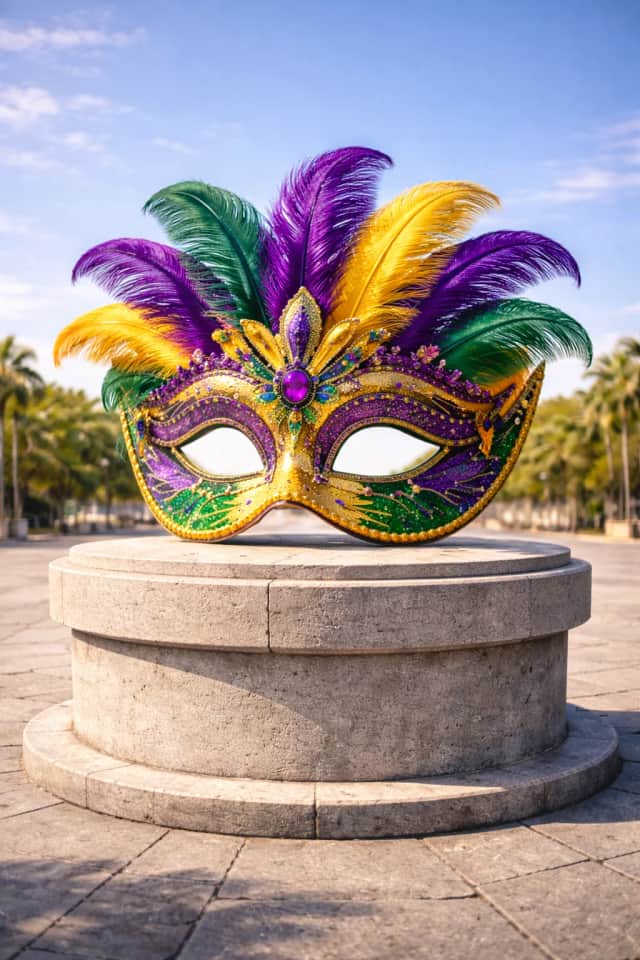
The first organized Mardi Gras parade, or \"krewe\", was the Mistick Krewe of Comus in 1857. Comus introduced the tradition of themed floats and elaborate costumes. Rex, the King of Carnival, first appeared in 1872 and established the official Mardi Gras colors: purple (justice), gold (power), and green (faith).
Mardi Gras became a legal holiday in Louisiana in 1875. Today, the celebration generates billions of dollars in tourism revenue and is one of the largest annual events in the United States.
How It's Celebrated
Parades with Elaborate Floats: Dozens of krewes parade through New Orleans in the weeks leading up to Mardi Gras. Major krewes include Rex, Zulu, Endymion, Bacchus, and Orpheus. Floats are elaborately decorated with the year's theme.
Throwing Beads, Doubloons, and Trinkets: Krewe members on floats throw beads, doubloons (aluminum coins), stuffed animals, and other trinkets to the crowd — known as \"throws.\" Catching throws is one of the most exciting parts of the celebration.
King Cake: A ring-shaped pastry decorated in purple, gold, and green icing, with a small plastic baby hidden inside. Whoever finds the baby is said to host the next king cake party or have good luck.
Krewes (Carnival Organizations): Social clubs that organize parades, balls, and other events. Each krewe has its own king and queen, theme, and traditions.
Masquerade Balls: Formal balls with elaborate costumes and masks, some dating back to the 18th century. Many are exclusive, invitation-only affairs.
The Official Colors: Purple represents justice, gold represents power, and green represents faith — established by Rex in 1872.
Where It's Observed
Mardi Gras is a public holiday in 1 country. In 2025, it falls on Tuesday, March 4.
Fun Facts
- The first American Mardi Gras celebration was held in Mobile, Alabama in 1703, not in New Orleans
- Rex, the King of Carnival, established the official Mardi Gras colors in 1872: purple for justice, gold for power, and green for faith
- The Mistick Krewe of Comus organized the first formal Mardi Gras parade in New Orleans in 1857
- King cake season runs from Epiphany (January 6) through Mardi Gras, and New Orleans bakeries sell hundreds of thousands of king cakes each year
- Mardi Gras has been a legal holiday in Louisiana since 1875 and is the only state in the U.S. where Fat Tuesday is an official holiday
- The Zulu krewe, founded in 1909, is one of the most prominent African American krewes and is known for its hand-decorated coconut throws
Frequently Asked Questions
Why is it called Mardi Gras?
Mardi Gras is French for Fat Tuesday. The name refers to the tradition of eating rich, fatty foods on the last day before the Christian season of Lent, which is a period of fasting and penance lasting 40 days before Easter.
When is Mardi Gras?
Mardi Gras falls 47 days before Easter, so the date changes each year. It can occur as early as February 3 or as late as March 9. The Carnival season leading up to it begins on Epiphany (January 6).
What are the Mardi Gras colors and what do they mean?
The official Mardi Gras colors are purple (justice), gold (power), and green (faith). These were established by Rex, the King of Carnival, in 1872 and have been the traditional colors ever since.
What is a krewe?
A krewe is a Carnival organization that plans and funds Mardi Gras parades, balls, and other events. Each krewe selects a king and queen, chooses a theme, and designs its own floats and throws. Some krewes date back to the mid-1800s.
Is Mardi Gras only celebrated in New Orleans?
While New Orleans is the most famous celebration, Mardi Gras is a state holiday across all of Louisiana. Mobile, Alabama also has a major celebration and claims to have hosted the first American Mardi Gras in 1703. Many other Gulf Coast cities celebrate as well.
Travel Inspiration
Planning a trip around Mardi Gras? Explore our travel guides for destinations where this holiday is celebrated.


