
Chuseok: Korean Thanksgiving
2030Thursday, September 12
Quick Facts
- Date
- Thursday, September 12, 2030
- Observed in
- South Korea
- Type
- Cultural Holiday
What is Chuseok: Korean Thanksgiving?
Chuseok (추석), also known as Hangawi (한가위), is the Korean Thanksgiving and one of Korea's two most important traditional holidays alongside Seollal. It is a three-day harvest festival celebrated on the 15th day of the 8th lunar month.
The date varies each year according to the lunar calendar, typically falling in September or early October.
Chuseok originated as a harvest celebration when families gathered to give thanks for the year's abundant crops. Today, Koreans return to their ancestral hometowns to honor deceased family members through memorial rites, visit ancestral graves, and spend quality time with extended family.
When is Chuseok: Korean Thanksgiving 2030?
Chuseok: Korean Thanksgiving is on Thursday, September 12 in 2030.
2030Thursday, September 12
History & Origin
The origins of Chuseok date back over 2,000 years. Historical records suggest it began as a month-long weaving competition during the reign of King Yuri of Silla (24-57 CE). The winning team was treated to a feast by the losing team.
During the Joseon Dynasty (1392-1897), Chuseok became firmly established as a major harvest festival. The full moon of the 8th lunar month marked the peak of the harvest season, making it a natural time for celebration and thanksgiving.
The holiday maintained its importance through the Japanese colonial period, though some practices were suppressed. After liberation, Chuseok was officially designated a public holiday, and in 1989, it was expanded to a three-day holiday to accommodate the nationwide family reunions.
The name "Chuseok" means "autumn evening," referring to the full moon evening of the 8th month. "Hangawi" is a pure Korean word meaning "the great middle of autumn."
How It's Celebrated
Seongmyo (성묘) - Grave Visits: Families visit and clean the graves of their ancestors, removing weeds and tidying the burial mounds. This practice, called beolcho (벌초), is typically done in the weeks leading up to Chuseok.
Charye (차례) - Ancestral Rites: On Chuseok morning, families prepare an elaborate table with freshly harvested foods and perform memorial rites to honor their ancestors.
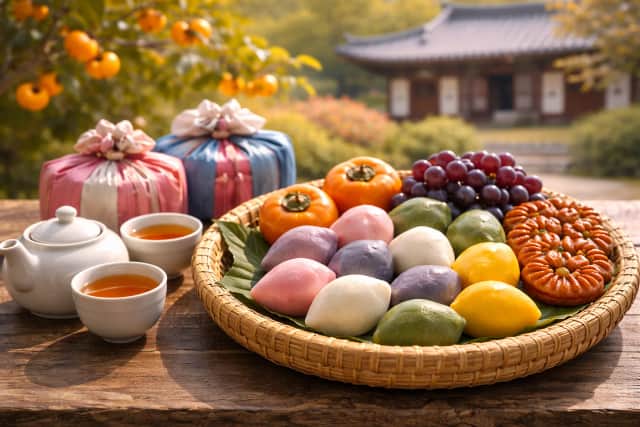
Songpyeon (송편): These half-moon shaped rice cakes are the signature food of Chuseok. Families gather to make them together, filling them with sesame seeds, beans, or chestnuts and steaming them on pine needles for fragrance.
Folk Games and Dances: Traditional activities include ganggangsullae (강강술래, circle dance under the full moon), ssireum (씨름, Korean wrestling), and various folk games.
Hanbok (한복): Many Koreans wear traditional clothing during the ancestral rites and family gatherings.
Full Moon Viewing: The full moon of Chuseok is considered especially beautiful. Families gather to view the moon and make wishes.
Where It's Observed
Chuseok: Korean Thanksgiving is a public holiday in 1 country. In 2030, it falls on Thursday, September 12.
Fun Facts
- There is a Korean saying: '덜도 말고 더도 말고 한가위만 같아라' - 'I wish every day could be like Hangawi' - expressing the holiday's abundance
- The shape of songpyeon reportedly predicts your future children - well-shaped songpyeon means beautiful children
- Ganggangsullae circle dance was originally performed by women under the full moon and is now a UNESCO Intangible Cultural Heritage
- During Chuseok, about 35 million trips are made nationwide as families reunite
- The tradition of making songpyeon together is called 'sonmat' (손맛) - literally 'taste of hands' - meaning food made with love
- Ssireum (Korean wrestling) competitions have been held on Chuseok since the Joseon Dynasty
- The full moon on Chuseok night is called 'jeongwoldaeboreum' and is believed to grant wishes
Frequently Asked Questions
When is Chuseok?
Chuseok is celebrated on the 15th day of the 8th lunar month. The date varies each year, typically falling between mid-September and early October. The three-day public holiday includes the day before, Chuseok itself, and the day after.
What is the difference between Chuseok and American Thanksgiving?
Both are harvest festivals centered on family and gratitude. However, Chuseok includes ancestral memorial rites (charye) and grave visits that reflect Korean Confucian traditions. The foods differ significantly - Chuseok features songpyeon (rice cakes) rather than turkey.
What food is eaten during Chuseok?
The signature food is songpyeon (half-moon rice cakes filled with sesame, beans, or chestnuts). Other dishes include jeon (savory pancakes), toran-tang (taro soup), japchae, freshly harvested fruits like pears and apples, and newly harvested rice.
Is Chuseok a good time to visit Korea?
The holiday period itself is challenging for tourism as many businesses close and transportation is extremely crowded. However, the days before and after offer beautiful autumn weather and special cultural events at palaces and museums.
What is songpyeon and why is it important?
Songpyeon are half-moon shaped rice cakes steamed on pine needles. Making songpyeon together as a family is an important Chuseok tradition, and there is a belief that making beautiful songpyeon means you will have beautiful children or find a good spouse.
What do Koreans do during Chuseok?
Koreans travel to their hometowns to reunite with family, perform ancestral memorial rites (charye), visit and clean ancestral graves (seongmyo), make and eat songpyeon together, play traditional games, and enjoy the full moon.
Travel Inspiration
Planning a trip around Chuseok: Korean Thanksgiving? Explore our travel guides for destinations where this holiday is celebrated.


