
St. Brigid's Day
2031Monday, February 3
Quick Facts
- Date
- Monday, February 3, 2031
- Observed in
- Ireland
- Type
- Cultural Holiday
What is St. Brigid's Day?
St. Brigid's Day (Lá Fhéile Bríde in Irish) is celebrated on the first Monday of February in Ireland and honors Saint Brigid of Kildare, one of Ireland's three patron saints alongside Patrick and Columba. Introduced as a public holiday in 2023, it is Ireland's first new public holiday since 1977 and the first to honor a woman. The day coincides with the ancient Celtic festival of Imbolc, marking the beginning of spring. It celebrates Irish heritage, women's contributions to society, and the transition from winter to the new growing season.
When is St. Brigid's Day 2031?
St. Brigid's Day is on Monday, February 3 in 2031. Check the dates and days for other years in the table below.
History & Origin
The history of St. Brigid's Day intertwines Christian and pre-Christian Celtic traditions. The Celtic festival of Imbolc (from Old Irish "imbolg" meaning "in the belly"), celebrated on February 1, marked the beginning of spring and was associated with the goddess Brigid. When Christianity arrived, many of these traditions were absorbed into the veneration of Saint Brigid (c. 451-525 AD), who founded the famous monastery at Kildare. Saint Brigid was known for her generosity, healing powers, and miracles. For centuries, February 1 was observed as a folk and religious celebration. In 2022, the Irish government announced that the first Monday of February would become a new public holiday starting in 2023, honoring both the saint and the Imbolc tradition, and recognizing women's contributions to Irish society.
How It's Celebrated
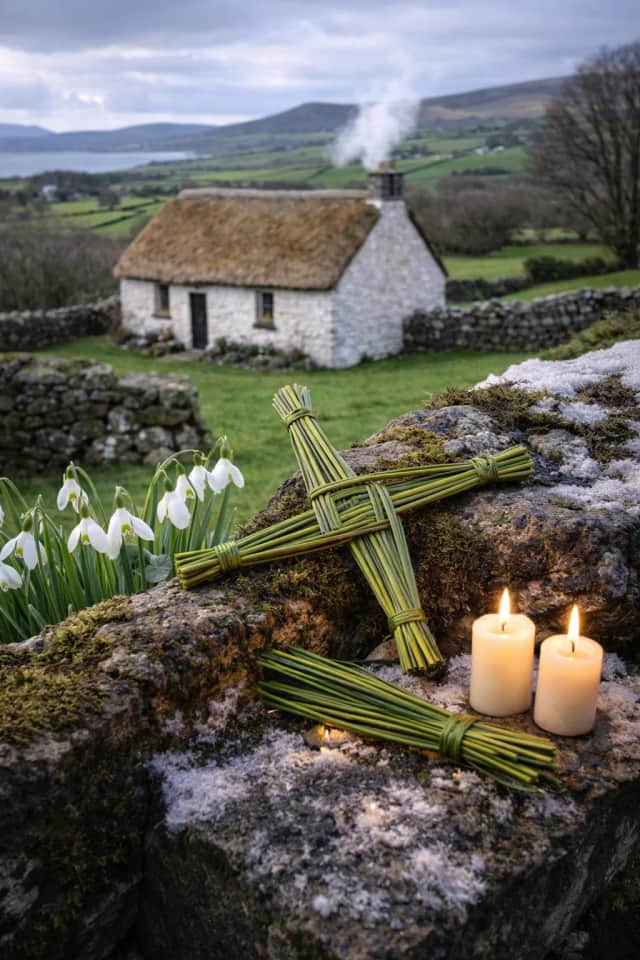
Traditional St. Brigid's Day customs include making Brigid's crosses (crosóga Bríde) from rushes, which are hung in homes for protection and good fortune. The previous year's cross is traditionally burned and replaced with a new one. In some areas, families create a Brídeog (a small doll representing Brigid) and carry it from house to house. On St. Brigid's Eve, people would leave a piece of cloth outside called the Brat Bríde (Brigid's Mantle), believed to be blessed by the saint and to have healing powers. Spring cleaning and blessing of seeds for planting are also traditional. Modern celebrations include cultural events, exhibitions about Saint Brigid, and appreciation of women's achievements.
Where It's Observed
St. Brigid's Day is a public holiday in 1 country. In 2031, it falls on Monday, February 3.
Fun Facts
- St. Brigid's Day is Ireland's first new public holiday in over 45 years and the first honoring a woman
- The Brigid's cross design predates Christianity and was originally a sun symbol
- Saint Brigid's perpetual flame at Kildare burned for over 1,000 years before being extinguished during the Reformation
- The ancient name Imbolc may also derive from 'oimelc' meaning 'ewe's milk,' as this was lambing season
- In 1993, the Brigidine Sisters relit Saint Brigid's flame in Kildare, where it still burns today
Frequently Asked Questions
When is St. Brigid's Day in Ireland?
St. Brigid's Day falls on the first Monday of February in Ireland. It was introduced as a public holiday in 2023. The traditional date of the festival is February 1.
Who was Saint Brigid?
Saint Brigid of Kildare (c. 451-525 AD) was one of Ireland's three patron saints. She founded a famous monastery at Kildare and was known for her generosity, miracles, and spiritual leadership. She is sometimes called 'Mary of the Gael.'
What is a Brigid's cross?
A Brigid's cross is a traditional woven cross made from rushes or straw, created on St. Brigid's Day. It is hung in homes for protection and good fortune. The design features four arms radiating from a woven square center.
What is Imbolc?
Imbolc is an ancient Celtic festival marking the beginning of spring, traditionally celebrated on February 1. It was associated with the goddess Brigid and celebrated fertility, the return of light, and the lambing season. Many Imbolc traditions were absorbed into St. Brigid's Day.
Travel Inspiration
Planning a trip around St. Brigid's Day? Explore our travel guides for destinations where this holiday is celebrated.


