
German Unity Day
2029Wednesday, October 3
Quick Facts
- Date
- Wednesday, October 3, 2029
- Observed in
- Germany
- Type
- Cultural Holiday
What is German Unity Day?
German Unity Day (Tag der Deutschen Einheit) is Germany's national holiday, celebrated on October 3rd each year. It commemorates the official reunification of East and West Germany in 1990, marking the end of over four decades of division.
This day holds profound significance for Germans as it represents not just political reunification, but the restoration of national unity after the Cold War's ideological division. Unlike many national holidays that celebrate independence or revolution, German Unity Day celebrates peaceful reunification achieved through diplomatic means.
October 3rd is the only national public holiday in Germany established by federal law, meaning it is observed uniformly across all 16 German states (Bundeslaender).
When is German Unity Day 2029?
German Unity Day is on Wednesday, October 3 in 2029. Check the dates and days for other years in the table below.
History & Origin
The path to German reunification began with the fall of the Berlin Wall on November 9, 1989, when East German authorities unexpectedly opened the border crossings. This momentous event followed months of peaceful protests, particularly the Monday Demonstrations in Leipzig.
After the Wall fell, negotiations began for German reunification. The Two Plus Four Agreement, signed on September 12, 1990, by the two German states and the four Allied powers (USA, USSR, UK, and France), paved the way for unity.
October 3, 1990 was chosen as the official reunification date, when the German Democratic Republic (East Germany) formally acceded to the Federal Republic of Germany. This date was deliberately chosen over November 9th to avoid associations with the anniversary of Kristallnacht (1938).
The reunification process, known as "Die Wende" (The Turn), transformed Europe's political landscape and marked the beginning of the end of the Cold War era.
How It's Celebrated
Official State Ceremony: Each year, a different German state hosts the main celebration (Buergerfest). The ceremony includes speeches by the Federal President and Chancellor.
Citizen Festivals (Buergerfeste): Large public festivals are held in the host city, featuring stages with music, cultural performances, information tents from federal institutions, and regional specialties.
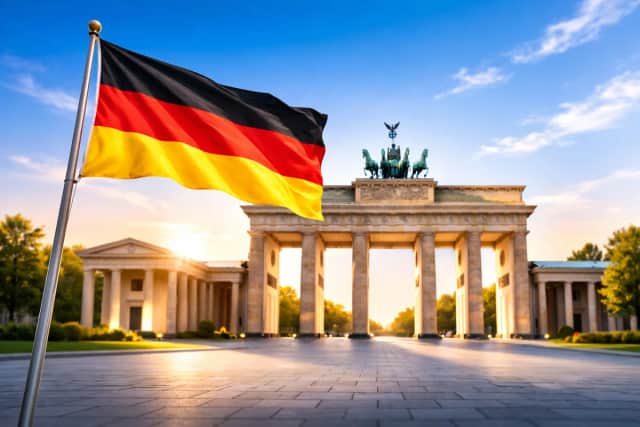
Flag Ceremonies: Government buildings display the German flag (black, red, and gold), and formal flag-raising ceremonies take place at official buildings.
Open Houses: Many government institutions, including the Bundestag and ministries, open their doors to the public.
Church Services: Ecumenical services are held in many cities, reflecting on unity and reconciliation.
Fireworks: Some cities conclude the celebrations with fireworks displays.
Cultural Events: Museums often offer free admission, and special exhibitions about German history and reunification are featured.
East-West Exchanges: Many events specifically celebrate the coming together of eastern and western German traditions.
Where It's Observed
German Unity Day is a public holiday in 1 country. In 2029, it falls on Wednesday, October 3.
Fun Facts
- October 3rd was chosen over November 9th as Unity Day because November 9th also marks the anniversary of Kristallnacht in 1938
- The reunification cost is estimated at over 2 trillion euros, funded largely through the Solidarity Surcharge tax
- When the Berlin Wall fell, approximately 2 million East Germans visited West Berlin in the first weekend alone
- The original Berlin Wall was 155 kilometers long and divided the city for 28 years
- Germany is the only country in the world that celebrates reunification rather than independence as its national day
- The Two Plus Four Agreement that enabled reunification was signed in just six months of negotiations
- East Germany's official name was the German Democratic Republic (GDR), despite not being democratic
- The iconic phrase 'Wir sind das Volk' (We are the people) became the slogan of the peaceful revolution
Frequently Asked Questions
Why is German Unity Day on October 3rd and not November 9th?
While November 9, 1989 (the fall of the Berlin Wall) is more famous, October 3rd was chosen because November 9th has negative historical associations in Germany, including the Kristallnacht pogrom of 1938. October 3, 1990 is when reunification officially and legally took effect.
Is German Unity Day a public holiday throughout Germany?
Yes, October 3rd is the only national public holiday established by federal law in Germany. All 16 states observe it, unlike other holidays which vary by state. Banks, schools, and most businesses are closed.
How is German Unity Day celebrated?
The main celebration is the Buergerfest (Citizen Festival), hosted by a different state each year. It features official ceremonies, speeches, music, cultural events, and food. Many government buildings open their doors, and museums often offer free admission.
What was the Berlin Wall?
The Berlin Wall was a barrier that divided Berlin from 1961 to 1989, separating East Berlin (controlled by the Soviet-backed GDR) from West Berlin. It became the most powerful symbol of the Iron Curtain and Cold War division.
What is the Solidarity Surcharge?
The Solidaritaetszuschlag (Solidarity Surcharge) is a supplementary tax introduced in 1991 to fund the costs of German reunification, including infrastructure development in eastern Germany. It has been gradually reduced and largely phased out for most taxpayers since 2021.
Which city hosts German Unity Day celebrations?
A different German state hosts the main celebration each year on a rotating basis. The host state organizes the official Buergerfest, which attracts hundreds of thousands of visitors. Check the current year's host city when planning your visit.
Travel Inspiration
Planning a trip around German Unity Day? Explore our travel guides for destinations where this holiday is celebrated.


Black Forest Shoulder Season Guide: Spa Retreats & Budget Trails
Read more →
Heidelberg for Solo Travelers: Complete 2-Day Guide
Read more →
Meeting People in Munich: Solo Traveler’s 4-Day Guide
Read more →
Cologne Alone: Solo Travel Safety Tips and Must-Do Experiences
Read more →