
Christmas
2024Wednesday, December 25
Quick Facts
- Date
- Wednesday, December 25, 2024
- Observed in
- Armenia, Argentina, Austria, Australia, Belgium +45 more
- Type
- Christian Holiday
What is Christmas?
Christmas is an annual festival commemorating the birth of Jesus Christ, observed on December 25th as a religious and cultural celebration by billions of people around the world. The word "Christmas" comes from "Christ's Mass," referring to the Christian liturgical celebration of the Nativity of Jesus.
While Christmas has deep Christian roots, it has evolved into a largely secular holiday in many countries, celebrated by Christians and non-Christians alike. The season is marked by gift-giving, family gatherings, festive decorations, special meals, and the legendary figure of Santa Claus (also known as Father Christmas, Saint Nicholas, or Père Noël).
Christmas is a public holiday in most countries worldwide and is considered the most significant celebration in the Christian liturgical calendar, along with Easter.
When is Christmas 2024?
Christmas is on Wednesday, December 25 in 2024. Check the dates and days for other years in the table below.
History & Origin
The exact date of Jesus' birth is unknown, and December 25th was not celebrated as Christmas until the 4th century. The date may have been chosen to coincide with the Roman winter solstice festival of Saturnalia and the birthday of the sun god Sol Invictus, making it easier to convert pagans to Christianity.
The first recorded Christmas celebration on December 25th was in Rome in 336 AD. By the Middle Ages, Christmas had become a major Christian feast, though celebrations varied widely across regions.
Many modern Christmas traditions developed in the 19th century. Prince Albert popularized Christmas trees in Britain after bringing the German tradition to Queen Victoria's court in 1840. Charles Dickens' "A Christmas Carol" (1843) helped establish the modern spirit of Christmas generosity. The modern image of Santa Claus was shaped by Clement Clarke Moore's 1823 poem "A Visit from St. Nicholas" and later by Coca-Cola's 1930s advertising campaigns.
In some countries, Christmas was once banned. The Puritans in England and colonial America prohibited Christmas celebrations in the 17th century, viewing them as too decadent and pagan.
How It's Celebrated
Christmas traditions vary greatly around the world, but common elements include:
Decorations: Christmas trees (real or artificial), lights, wreaths, nativity scenes, stockings, and ornaments. The tradition of decorating evergreen trees originated in Germany in the 16th century.
Gift-Giving: Exchanging presents on Christmas Eve or Christmas Day, often attributed to Santa Claus, Father Christmas, or the Three Wise Men (in Hispanic cultures). Children often leave out cookies and milk for Santa.
Special Foods: Traditional Christmas meals vary by country: roast turkey or goose in the UK and US, Réveillon feasts in France, Wigilia dinner in Poland, Julbord in Sweden, and panettone in Italy.
Music and Carols: Singing Christmas carols like "Silent Night," "Jingle Bells," and "O Holy Night." Carol singing dates back to the 13th century.
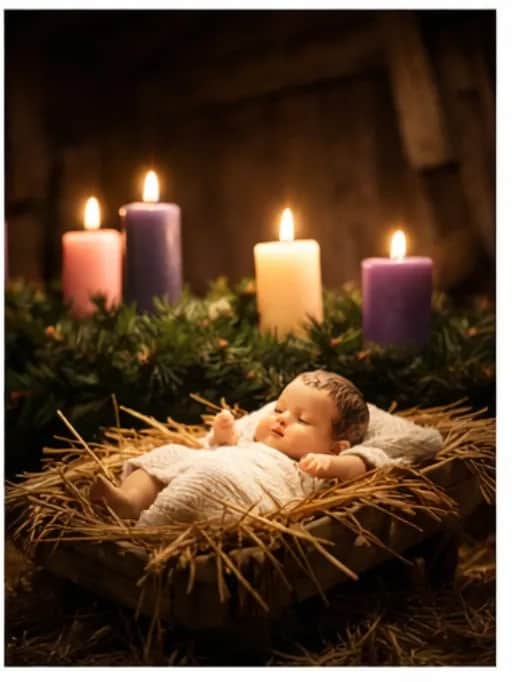
Advent: The four-week period before Christmas, marked by Advent calendars, Advent wreaths with candles, and Christmas markets in German-speaking countries.
Christmas Cards: Sending greeting cards to friends and family, a tradition that began in Britain in the 1840s.
Where It's Observed
Christmas is a public holiday in 50 countries. In 2024, it falls on Wednesday, December 25.
Fun Facts
- The song "Jingle Bells" was originally written for Thanksgiving, not Christmas, by James Lord Pierpont in 1857
- Christmas was illegal in England from 1647 to 1660 under Oliver Cromwell's Puritan government
- Japan has a tradition of eating KFC for Christmas dinner, started by a successful 1974 marketing campaign
- The largest Christmas gift ever given was the Statue of Liberty from France to the United States in 1886
- Santa's red suit was popularized (not invented) by Coca-Cola's 1930s advertising campaign
- In Catalonia, Spain, children have a 'pooping log' (Caga Tió) that they beat with sticks to make it defecate presents
- Christmas trees can take up to 15 years to grow to typical selling size
- The tradition of hanging stockings comes from the legend of St. Nicholas dropping gold coins down a chimney into stockings drying by the fire
- Iceland has 13 Yule Lads instead of Santa Claus, each visiting children on a different night before Christmas
Frequently Asked Questions
Why is Christmas celebrated on December 25th?
The exact date of Jesus' birth is unknown. December 25th was chosen in the 4th century, possibly to coincide with existing Roman winter solstice festivals and the birthday of the sun god Sol Invictus, facilitating the conversion of pagans to Christianity.
What is the origin of the Christmas tree?
The tradition of decorating evergreen trees originated in Germany in the 16th century. It became popular in Britain after Prince Albert brought the tradition from Germany when he married Queen Victoria in 1840.
Who is Santa Claus based on?
Santa Claus is based on St. Nicholas, a 4th-century Christian bishop from Myra (modern-day Turkey) known for his generosity to the poor. The modern image developed through Dutch traditions (Sinterklaas), literature, and 20th-century advertising.
Why do we give gifts at Christmas?
Gift-giving commemorates the gifts of gold, frankincense, and myrrh brought by the Magi to baby Jesus. It also reflects the spirit of generosity associated with St. Nicholas and the Christian message of God's gift of Jesus to humanity.
When did Christmas become a public holiday?
Christmas became a public holiday at different times in different countries. In the United States, it became a federal holiday in 1870. In England, it became a bank holiday in 1871.
Why is Christmas called Xmas?
The 'X' in Xmas comes from the Greek letter Chi (Χ), the first letter of 'Christos' (Christ in Greek). It has been used as an abbreviation for Christ since the 16th century and is not a modern attempt to remove Christ from Christmas.
Travel Inspiration
Planning a trip around Christmas? Explore our travel guides for destinations where this holiday is celebrated.


