
Ascension Day
2025Thursday, May 29
Quick Facts
- Date
- Thursday, May 29, 2025
- Observed in
- Austria, Belgium, Switzerland, Colombia, Germany +11 more
- Type
- Religious Holiday
What is Ascension Day?
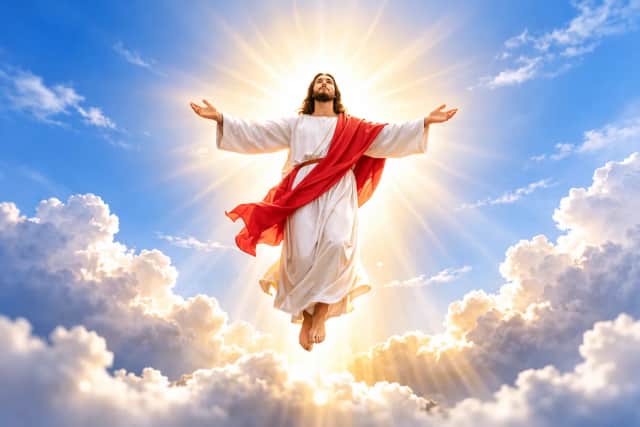
Ascension Day, also known as the Feast of the Ascension, is a Christian holiday commemorating the ascension of Jesus Christ into heaven. According to the New Testament, this event occurred 40 days after Easter Sunday, when Jesus rose from the dead. The holiday always falls on a Thursday, making it one of the few Christian holidays that is not celebrated on a Sunday.
The Ascension marks a pivotal moment in Christian theology - the completion of Jesus's earthly ministry and his return to sit at the right hand of God the Father. For believers, it represents the promise that Christ will return again and that followers of Jesus will eventually join him in heaven.
Ascension Day is observed by Christians worldwide, including Catholics, Protestants, and Orthodox believers (though Orthodox churches often celebrate on a different date due to calendar differences). In many European countries, Ascension Thursday is a public holiday, creating a long weekend when combined with the following Friday.
When is Ascension Day 2025?
Ascension Day is on Thursday, May 29 in 2025. Check the dates and days for other years in the table below.
History & Origin
The Ascension of Jesus is recorded in several New Testament books. The most detailed account appears in the Acts of the Apostles (1:9-11), which describes how Jesus led his disciples to the Mount of Olives near Bethany, outside Jerusalem. After giving them final instructions and blessing them, "he was taken up before their very eyes, and a cloud hid him from their sight."
Two angels then appeared and told the disciples: "This same Jesus, who has been taken from you into heaven, will come back in the same way you have seen him go into heaven." This promise of Christ's return remains central to Christian eschatology.
The celebration of Ascension Day as a distinct feast dates back to at least the 4th century. Saint Augustine (354-430 AD) mentioned it as an ancient and universal celebration. The Council of Elvira in Spain (around 300 AD) may have referenced the feast, and by the late 4th century, it was widely observed throughout the Christian world.
The 40-day period between Easter and Ascension has deep biblical significance. The number 40 appears frequently in Scripture: 40 days of rain during the flood, 40 years of wandering in the wilderness, 40 days of Moses on Mount Sinai, and 40 days of Jesus's temptation in the desert.
How It's Celebrated
Ascension Day traditions vary across different cultures and Christian denominations, blending religious observance with local customs.
Church Services: Special services are held in churches worldwide, featuring readings from Acts 1 and the Gospel accounts of the Ascension. Many churches extinguish the Paschal candle that was lit at Easter, symbolizing Christ's departure from earth. In Catholic and some Protestant churches, processions may take place.
Ascension Day Processions: In parts of Germany, Austria, and other European countries, outdoor processions through fields and villages are traditional. These often include prayers for good weather and successful harvests, connecting the feast with agricultural cycles.
Father's Day Connection: In Germany, Ascension Day is also celebrated as Father's Day (Vatertag or Herrentag). Men traditionally go on group outings, often hiking or cycling while enjoying food and drinks. This secular tradition has become as significant as the religious observance.
Beating the Bounds: In England, the old custom of "beating the bounds" was traditionally performed around Ascension Day. Parish members would walk the boundaries of their parish, sometimes beating boundary markers with willow branches.
Bird Releasing: In some Orthodox traditions, doves or other birds are released during Ascension services, symbolizing Christ's ascent to heaven.
Mountain Pilgrimages: In several countries, believers climb hills or mountains on Ascension Day, symbolically following Christ's ascent. The Mount of Olives in Jerusalem sees many pilgrims on this day.
Religious Significance
Ascension Day holds profound theological significance in Christian doctrine, marking several important spiritual truths.
Completion of Earthly Ministry: The Ascension represents the conclusion of Jesus's physical presence on earth. Having completed his mission of teaching, healing, dying for humanity's sins, and rising from the dead, Jesus returned to his place of glory with the Father.
Exaltation of Christ: The Ascension affirms Jesus's divine nature and his position of authority. Scripture describes him as seated "at the right hand of God" (Mark 16:19), a position of honor and power indicating his role as ruler and intercessor.
Promise of the Holy Spirit: Before ascending, Jesus promised to send the Holy Spirit to guide and empower his followers. This promise was fulfilled ten days later at Pentecost, when the Spirit descended on the disciples.
Hope of Return: The angels' message that Jesus would return "in the same way" gives Christians hope in the Second Coming. The Ascension is thus linked to expectations of Christ's eventual return to judge the living and the dead.
Humanity in Heaven: Theologically, the Ascension means that human nature has been taken into heaven. Jesus ascended in his resurrected human body, which many Christians interpret as a promise of believers' own future resurrection and heavenly existence.
The Ascension in Creeds: The Ascension is affirmed in the Apostles' Creed ("He ascended into heaven") and the Nicene Creed, making it a core doctrine accepted by virtually all Christian denominations.
Where It's Observed
Ascension Day is a public holiday in 16 countries. In 2025, it falls on Thursday, May 29.
Travel Tips
Ascension Day (Thursday, 40 days after Easter) is a public holiday in several European countries, affecting travel plans:
Public Holiday Countries: Ascension Day is a public holiday in Germany, Austria, Switzerland, France, Belgium, Netherlands, Luxembourg, Denmark, Sweden, Norway, Finland, and Iceland. In these countries, expect closures similar to Sundays.
The Long Weekend: Many people take the Friday after Ascension as a "bridge day" to create a four-day weekend. This makes the period around Ascension one of the busiest travel times in Europe. Book accommodations well in advance.
Shop Closures: Most shops and businesses close on Ascension Thursday. Plan your shopping for Wednesday or wait until Friday (in countries where Friday is a normal working day).
Father's Day in Germany: If traveling in Germany, be aware that Ascension Day is also Vatertag (Father's Day). Expect groups of men on outdoor excursions, sometimes quite boisterous. Popular hiking trails and beer gardens will be busy.
Church Services: If interested in attending services, major churches often hold special Ascension Day liturgies. Some organize outdoor services or processions that welcome visitors.
Weather: Ascension Day falls in May or early June, typically offering pleasant spring weather in Europe. Pack layers and be prepared for variable conditions.
Transportation: Public transport usually operates on Sunday/holiday schedules. Check timetables in advance, as frequency may be reduced.
Fun Facts
- Ascension Day always falls on a Thursday, exactly 40 days after Easter Sunday
- In Germany, Ascension Day doubles as Father's Day (Vatertag), with men traditionally going on group hikes with wagons of beer
- The Mount of Olives in Jerusalem, where the Ascension is said to have occurred, is visited by thousands of pilgrims on Ascension Day
- Some medieval churches had a hole in the ceiling called the 'Ascension hole' through which a statue of Christ was hoisted during services
- In England, the custom of 'beating the bounds' involved walking parish boundaries and sometimes beating young boys at boundary markers so they would remember the locations
- The 40-day period between Easter and Ascension appears throughout the Bible as a significant timeframe
- In Portugal, Ascension Day was traditionally called 'Quinta-feira da Espiga' (Thursday of the Ear of Wheat), associated with harvesting rituals
- The Paschal candle, lit at Easter, is traditionally extinguished on Ascension Day in many churches
- Ascension Day is one of the ecumenical feasts celebrated by Catholics, Protestants, and Orthodox Christians alike
- In some countries, releasing white birds (especially doves) during Ascension services symbolizes Christ's ascent to heaven
Frequently Asked Questions
When is Ascension Day 2026?
Ascension Day 2026 falls on Thursday, May 14th. It is always celebrated 40 days after Easter Sunday, which in 2026 is April 5th.
Why is Ascension Day always on a Thursday?
Ascension Day is always on a Thursday because it occurs exactly 40 days after Easter Sunday. Counting 40 days from Sunday always lands on a Thursday (Sunday + 39 days = Thursday).
Is Ascension Day a public holiday?
Yes, in many European countries including Germany, France, Austria, Switzerland, Belgium, Netherlands, Luxembourg, and the Nordic countries. However, it is not a public holiday in the UK, US, Spain, Italy, or Poland.
What is the difference between Ascension Day and Pentecost?
Ascension Day commemorates Jesus ascending to heaven 40 days after Easter. Pentecost, celebrated 10 days after Ascension (50 days after Easter), commemorates the descent of the Holy Spirit upon the apostles. Both mark key events following Jesus's resurrection.
Why is Ascension Day also Father's Day in Germany?
The connection dates to the late 19th century when men began using the public holiday for group outings. The tradition of 'Herrentag' (Gentlemen's Day) evolved into a celebration of fatherhood, though it often involves groups of men (not necessarily fathers) on outdoor excursions.
Where did the Ascension take place?
According to the Bible (Acts 1:12), the Ascension took place on the Mount of Olives, near Bethany, just outside Jerusalem. Today, the Chapel of the Ascension marks the traditional site and is a popular pilgrimage destination.
Do Orthodox Christians celebrate Ascension Day on the same date?
Orthodox churches that follow the Julian calendar celebrate Ascension Day 13 days later than Western churches. However, Orthodox churches using the Revised Julian Calendar celebrate on the same date as Catholics and Protestants.
Are shops open on Ascension Day?
In countries where Ascension Day is a public holiday, most shops and businesses are closed, similar to Sunday closures. Essential services, some restaurants, and tourist attractions may remain open.
Travel Inspiration
Planning a trip around Ascension Day? Explore our travel guides for destinations where this holiday is celebrated.


4 Days Munich and Neuschwanstein Fairy Tale Route
Read more →
3 Days in Zurich: Lake Views and Alpine Peaks
Read more →
3 Days in Vienna: Imperial Palaces and Coffee Houses
Read more →
Heidelberg for Solo Travelers: Complete 2-Day Guide
Read more →