
Anti-Fascist Struggle Day
2028Thursday, June 22
Quick Facts
- Date
- Thursday, June 22, 2028
- Observed in
- Croatia
- Type
- Cultural Holiday
What is Anti-Fascist Struggle Day?
Anti-Fascist Struggle Day (Dan antifašističke borbe) is a national public holiday in Croatia, observed on June 22nd each year. It commemorates the formation of the first armed anti-fascist resistance unit in Croatia and occupied Europe during World War II.
On this date in 1941, the Sisak Partisan Detachment was formed in the forests near Sisak, marking the beginning of organized armed resistance against Nazi and Fascist occupation in Croatia. This was a pivotal moment in European history, as it represented one of the earliest organized military responses to Axis occupation.
The holiday honors the courage and sacrifice of the Partisans who fought against fascism, and serves as a reminder of the importance of defending democratic values and human rights against totalitarian ideologies.
When is Anti-Fascist Struggle Day 2028?
Anti-Fascist Struggle Day is on Thursday, June 22 in 2028. Check the dates and days for other years in the table below.
History & Origin
The formation of the Sisak Partisan Detachment on June 22, 1941 came just one day after Nazi Germany launched Operation Barbarossa against the Soviet Union, and less than three months after the Axis invasion of Yugoslavia in April 1941.
Following the invasion, the Independent State of Croatia (NDH) was established as a Nazi puppet state under the Ustasha regime. The Ustasha immediately began implementing brutal policies of persecution against Serbs, Jews, Roma, and anti-fascist Croats.
In response, resistance fighters began organizing. The Sisak Partisan Detachment (Sisački partizanski odred) was formed on June 22, 1941, near the town of Sisak in central Croatia. It consisted of approximately 40 fighters initially, led by communist organizers.
This unit is historically significant as it was the first armed anti-fascist resistance unit formed in occupied Europe outside of the Soviet Union. The Partisans, led by Josip Broz Tito, would grow into a formidable resistance movement of over 800,000 fighters by the end of the war.
The Croatian Partisans fought alongside their counterparts from other Yugoslav nations, eventually liberating the country from Nazi occupation. After the war, June 22nd was established as a day of commemoration to honor this resistance.
How It's Celebrated
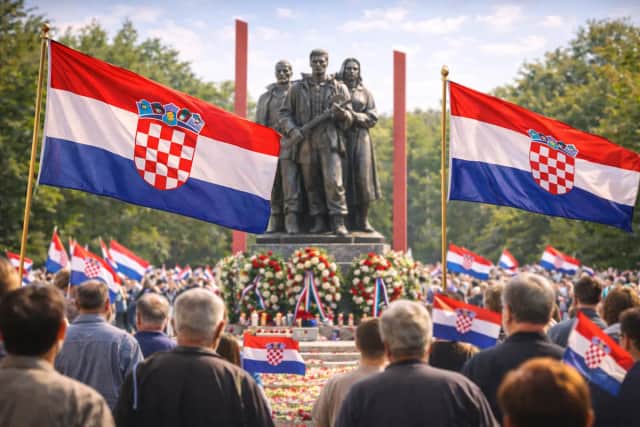
Official State Ceremonies: The main commemorations take place in Sisak and at Brezovica Forest, the site where the Sisak Partisan Detachment was formed. Government officials, veterans' organizations, and citizens gather for ceremonies.
Wreath Laying: Officials and citizens lay wreaths at partisan monuments and memorials throughout Croatia, particularly at sites significant to the anti-fascist resistance.
Memorial Visits: Families visit graves of Partisan fighters and victims of fascist persecution. Many travel to memorial sites and former concentration camps to pay their respects.
Educational Programs: Schools and cultural institutions organize lectures, exhibitions, and documentary screenings about the anti-fascist resistance and World War II history.
Concerts and Cultural Events: Some cities organize concerts and cultural programs celebrating the values of anti-fascism, freedom, and human dignity.
Reflection and Remembrance: The day serves as a time for national reflection on the sacrifices made during WWII and the importance of vigilance against extremist ideologies.
Veterans' Gatherings: Remaining WWII veterans and their descendants gather to share stories and preserve the memory of the resistance.
Where It's Observed
Anti-Fascist Struggle Day is a public holiday in 1 country. In 2028, it falls on Thursday, June 22.
Fun Facts
- The Sisak Partisan Detachment was formed on June 22, 1941, making it one of the first armed anti-fascist resistance units in occupied Europe
- The initial detachment consisted of approximately 40 fighters, but the Yugoslav Partisans grew to over 800,000 by the end of WWII
- The Yugoslav Partisans were the largest resistance movement in occupied Europe during World War II
- Josip Broz Tito, who led the Partisans, became the only leader of an occupied European nation to liberate his country primarily through domestic resistance
- Women made up approximately 100,000 of the Partisan fighters, with many serving in combat roles
- The Partisans were recognized by the Allies as the legitimate resistance force in Yugoslavia in 1943
- Croatia's Anti-Fascist Struggle Day is one of the few European holidays specifically commemorating WWII anti-fascist resistance
- The resistance included people of all Yugoslav nationalities and religions, united against fascism
Frequently Asked Questions
What does Anti-Fascist Struggle Day commemorate?
Anti-Fascist Struggle Day commemorates the formation of the Sisak Partisan Detachment on June 22, 1941, which was the first armed anti-fascist resistance unit formed in Croatia and one of the first in occupied Europe during World War II.
Why is June 22nd significant in Croatian history?
June 22, 1941 marks the day when the Sisak Partisan Detachment was formed near the town of Sisak, beginning the organized armed resistance against Nazi and Fascist occupation in Croatia. This date is now a national public holiday.
Who were the Yugoslav Partisans?
The Yugoslav Partisans were a multi-ethnic resistance movement led by Josip Broz Tito that fought against Axis occupation during WWII. They grew from small groups like the Sisak Detachment to become the largest resistance movement in occupied Europe, with over 800,000 fighters.
Is Anti-Fascist Struggle Day a public holiday in Croatia?
Yes, June 22nd is a national public holiday in Croatia. Government offices, schools, and many businesses are closed. Official commemorations are held throughout the country, particularly in Sisak.
Where can I learn more about the Partisan movement in Croatia?
Key sites include the Town Museum of Sisak, the Brezovica Forest memorial, the Croatian History Museum in Zagreb, and the Jasenovac Memorial Site. These locations offer exhibitions, artifacts, and historical context about the anti-fascist resistance.
How do Croatians observe Anti-Fascist Struggle Day?
Observances include official state ceremonies at Brezovica Forest and other memorial sites, wreath laying at Partisan monuments, memorial visits to graves and concentration camp sites, educational programs, and family gatherings to honor those who fought against fascism.
Travel Inspiration
Planning a trip around Anti-Fascist Struggle Day? Explore our travel guides for destinations where this holiday is celebrated.


