
Makha Bucha: Thailand's Sacred Buddhist Holiday
2025Wednesday, February 12
Quick Facts
- Date
- Wednesday, February 12, 2025
- Observed in
- Thailand
- Type
- Public Holiday
What is Makha Bucha: Thailand's Sacred Buddhist Holiday?
Makha Bucha (also spelled Magha Puja) is one of Thailand's three most sacred Buddhist holidays, commemorating a miraculous event when 1,250 enlightened disciples spontaneously gathered to hear Buddha preach without any prior arrangement.
The name combines "Makha" (the third lunar month in the ancient Indian calendar) and "Bucha" (to honor or worship). This profound day falls on the full moon of the third lunar month, typically in February or early March.
Makha Bucha celebrates the proclamation of Buddhism's core ethical teachings—the Ovadhapatimokha—which Buddha delivered to this extraordinary assembly. The day is marked by solemn temple ceremonies, beautiful candlelit processions called Wien Tien, and deep spiritual reflection across Thailand.
As a national holiday, Makha Bucha sees the nationwide ban on alcohol sales, closure of entertainment venues, and a general atmosphere of contemplation. For visitors, it offers a rare glimpse into authentic Thai Buddhist practice and the spiritual heart of Thai culture.
When is Makha Bucha: Thailand's Sacred Buddhist Holiday 2025?
Makha Bucha: Thailand's Sacred Buddhist Holiday is on Wednesday, February 12 in 2025. Check the dates and days for other years in the table below.
History & Origin
Makha Bucha commemorates one of the most miraculous events in Buddhist history, occurring nine months after Buddha's enlightenment at the Veluvana Bamboo Grove near Rajagaha in ancient India (modern-day Bihar).
The Fourfold Assembly Miracle (Chaturaṅgasannipāta)
On this full moon day, four extraordinary conditions aligned simultaneously—an event so rare it is considered miraculous:
1. 1,250 Arahants gathered - All were fully enlightened beings who had achieved nirvana
2. Spontaneous assembly - They came without prior invitation or arrangement
3. Direct ordination - All had been ordained directly by Buddha himself through the Ehi Bhikkhu ordination
4. Full moon of Makha - The gathering occurred on this auspicious lunar date
The Ovadhapatimokha Sermon
To this extraordinary gathering, Buddha delivered the Ovadhapatimokha—considered the summary of all Buddhist teachings, containing 227 rules for monks and the essence of Buddhist ethics condensed into three principles:
1. Sabbapāpassa akaraṇaṃ - Cease from all evil
2. Kusalassa upasampadā - Cultivate good
3. Sacittapariyodapanaṃ - Purify the mind
This sermon established the foundation for Buddhist monastic discipline and ethical conduct that continues to guide millions of practitioners today.
Official Recognition in Thailand
King Rama IV (King Mongkut), himself a former monk for 27 years, began promoting Makha Bucha observance in Thailand during the mid-19th century. His son, King Rama VI, officially established it as a national holiday in 1913, making it a cornerstone of Thai Buddhist practice.
How It's Celebrated
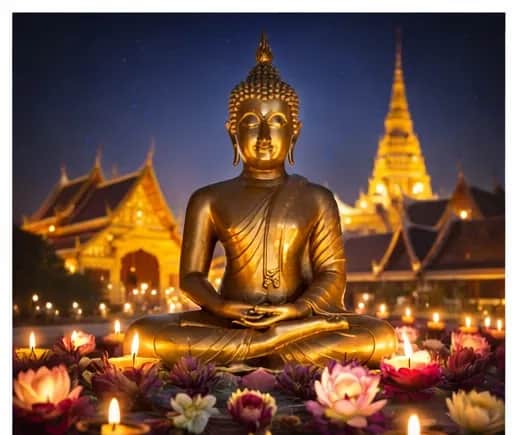
Wien Tien - The Candlelit Circumambulation: The most visually stunning tradition of Makha Bucha is Wien Tien—a candlelit procession where thousands of devotees walk clockwise three times around the temple's main ordination hall. Participants carry a lighted candle (representing Buddha's wisdom), three incense sticks (representing the Triple Gem), and lotus flowers (symbolizing purity). Each circuit honors one of the Three Jewels: Buddha, Dharma, and Sangha.
Merit-Making Throughout the Day: Makha Bucha is a day of intensive merit-making (tham bun), including pre-dawn alms-giving (Tak Bat), temple offerings, meditation retreats, Dharma talks by monks, and observing the Eight Precepts.
Temple Activities: Major temples organize special programs including chanting sessions reciting the Ovadhapatimokha, meditation workshops, Dharma discussions about applying Buddhist principles to modern life, and special blessing ceremonies.
Where It's Observed
Makha Bucha: Thailand's Sacred Buddhist Holiday is a public holiday in 1 country. In 2025, it falls on Wednesday, February 12.
Fun Facts
- The spontaneous gathering of exactly 1,250 enlightened disciples without prior arrangement is called the Fourfold Assembly miracle or Chaturaṅgasannipāta
- Makha Bucha is observed in all Theravada Buddhist countries including Laos, Cambodia, Myanmar, and Sri Lanka under different names
- The Wien Tien candlelit procession's three circuits around the temple symbolize devotion to Buddha, Dharma, and Sangha—the Triple Gem
- Thailand began enforcing the alcohol sales ban on Buddhist holidays in 2015, though the tradition of abstinence is much older
- Wat Phra Dhammakaya temple near Bangkok holds one of the world's largest Makha Bucha gatherings, with over 100,000 participants
- The Ovadhapatimokha delivered on Makha Bucha day is considered the Buddhist equivalent of the Ten Commandments—a summary of all ethical teachings
- King Rama VI established Makha Bucha as a Thai national holiday in 1913 to strengthen Buddhist identity during a period of Western colonial pressure in Southeast Asia
Frequently Asked Questions
When is Makha Bucha Day?
Makha Bucha falls on the full moon of the third lunar month, typically in February or early March. The exact date changes each year based on the lunar calendar. In 2025 it falls on February 12, in 2026 on March 3, and in 2027 on February 20.
Can tourists drink alcohol on Makha Bucha?
No. Thailand enforces a strict 24-hour nationwide ban on alcohol sales from midnight before Makha Bucha until midnight of the holiday. This applies to all stores, restaurants, bars, and hotels. Plan to purchase any alcohol you need the day before.
What should tourists do on Makha Bucha?
The most meaningful experience is attending an evening Wien Tien ceremony at a temple. Arrive 1-2 hours early at major temples, dress modestly with covered shoulders and knees, and participate in the beautiful candlelit procession around the temple. It offers authentic insight into Thai Buddhist culture.
Are tourist attractions open on Makha Bucha?
Yes, most tourist attractions, hotels, restaurants (serving food), and transportation services operate normally. However, government offices and banks are closed. Entertainment venues like nightclubs may also be closed, and the general atmosphere is more subdued than usual.
What is the Wien Tien ceremony?
Wien Tien is a candlelit procession where devotees walk clockwise three times around the temple's main hall, carrying candles, incense, and lotus flowers. Each circuit honors one of the Three Jewels: Buddha, Dharma (teachings), and Sangha (monastic community). It typically begins at dusk and is the most visually beautiful Buddhist ceremony in Thailand.
Travel Inspiration
Planning a trip around Makha Bucha: Thailand's Sacred Buddhist Holiday? Explore our travel guides for destinations where this holiday is celebrated.


